
#01
→
SALÒ, OR THE 120 DAYS OF SODOM
1975, Italy, dir. Pier Paolo Pasolini, 116 mins
NOTES:
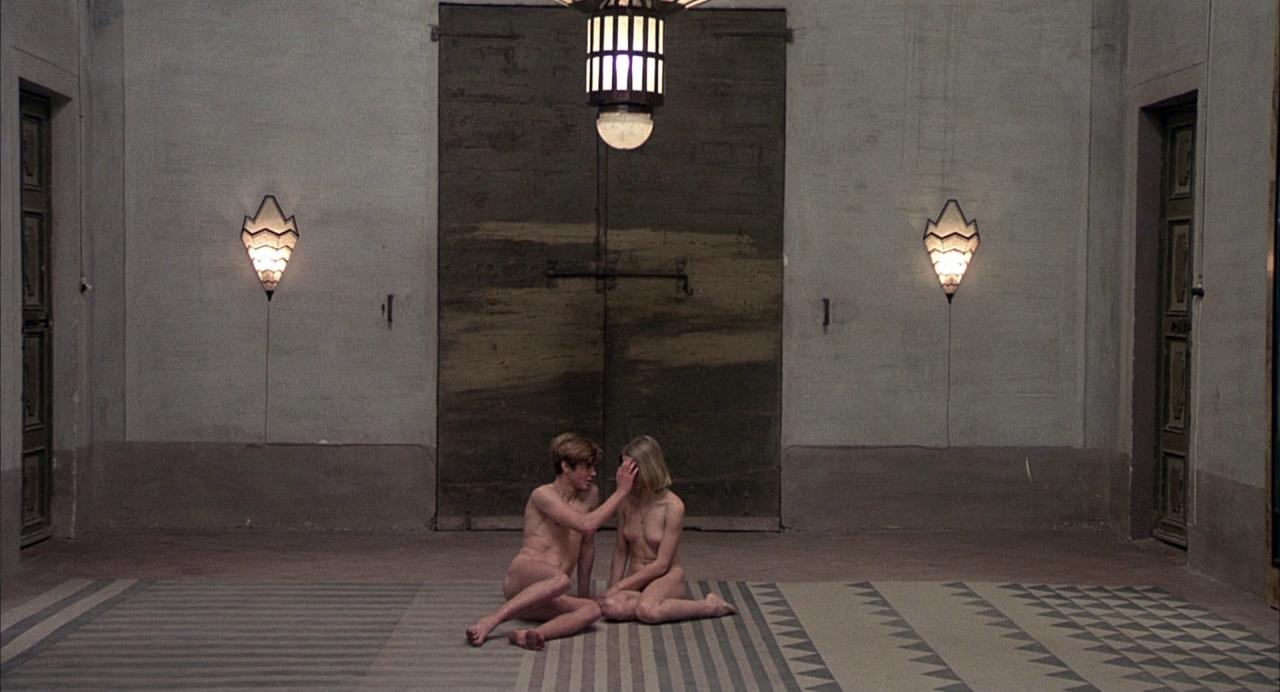
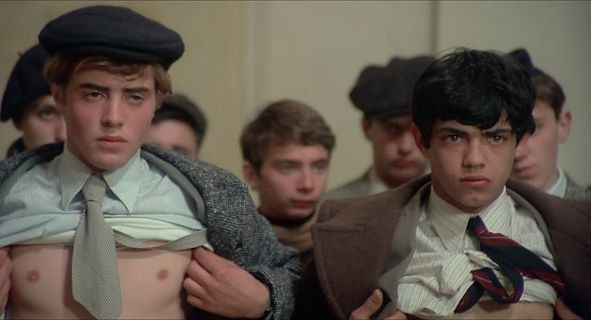
Pasolini's final film is a reviled masterpiece. Notorious for its garish imagery and formidable subject matter, Salò houses a sharp and ultra-relevant meditation on power and the limits of libertinage. It's a daring indictment of fascism and has been banned in multiple countries since before its release.
Salò is an adaptation of the 18th century psychopathia sexualis "120 Days of Sodom" by Marquis de Sade, updated for WWII-era fascist Italy. Fleeing civil society to express the full spectrum of their sadistic desires, the film's fascist subjects end up imprisoned by their own newly invented governing laws. It brings to mind the "lunatic fringe" section of the political horseshoe theory, the liminal space where the far left and right blur together.
From Wikipedia:
“Sade’s novel only survives in draft form. Sade wrote it in secrecy while imprisoned in the Bastille. When the fortress was stormed by revolutionaries on 14 July 1789, Sade believed the manuscript had been lost. However, it had been found and preserved without his knowledge and was eventually published in a restricted edition in 1904 for its scientific interest to sexologists. The novel was banned as pornographic in France and English-speaking countries before becoming more widely available in commercial editions in the 1960s.
Premiering at the Paris Film Festival on 23 November 1975, [Pasolini’s Salò] had a brief theatrical run in Italy before being banned in January 1976, and was released in the United States the following year on 3 October 1977.”
“The surest way of prolonging its desires is to try and impose limits upon it.”
—Marquis de Sade, 120 Days of Sodom
“Liberty in heterosexual relationships has become obligatory. That liberty is a form of exploitation, a dictatorship of conformity. The couple has become an obsession, an incubus; young people feel they must couple off. This is also a misuse of sex. And it is also, like in de Sade, a misuse in the service of power and of the exploitation of the human body. The body is forced—sold—into a position which dehumanizes its soul.”
—Pasolini, “Pasolini on de Sade”
“Sade’s work is a comprehensive satiric critique of Rousseau, written in the decade after the first failed Rousseauist experiment, the French Revolution, which ended not in political paradise but the Reign of Terror. [. . .] For Sade, getting back to nature [. . .] would be to give free rein to violence and lust. I agree. Society is not the criminal but the force which keeps crime in check.”
—Camille Paglia, Sexual Personae, ch. 8
FURTHER READING:
“Pasolini on de Sade” — an interview during the filming of Salò
120 Days of Sodom, Marquis de Sade
Les Chants de Maldoror, Comte de Lautréamont
Boys Alive, Pier Paolo Pasolini
“Rousseau v. Sade”, Camille Paglia (Sexual Personae, ch. 8)
The Social Contract, Jean-Jacques Rousseau
On the Genealogy of Morality, Friedrich Nietzsche
The Cantos, Ezra Pound
Authors: Aruther Rimbaud, Gabriele D’Anunzio, Dennis Cooper
Return to archive